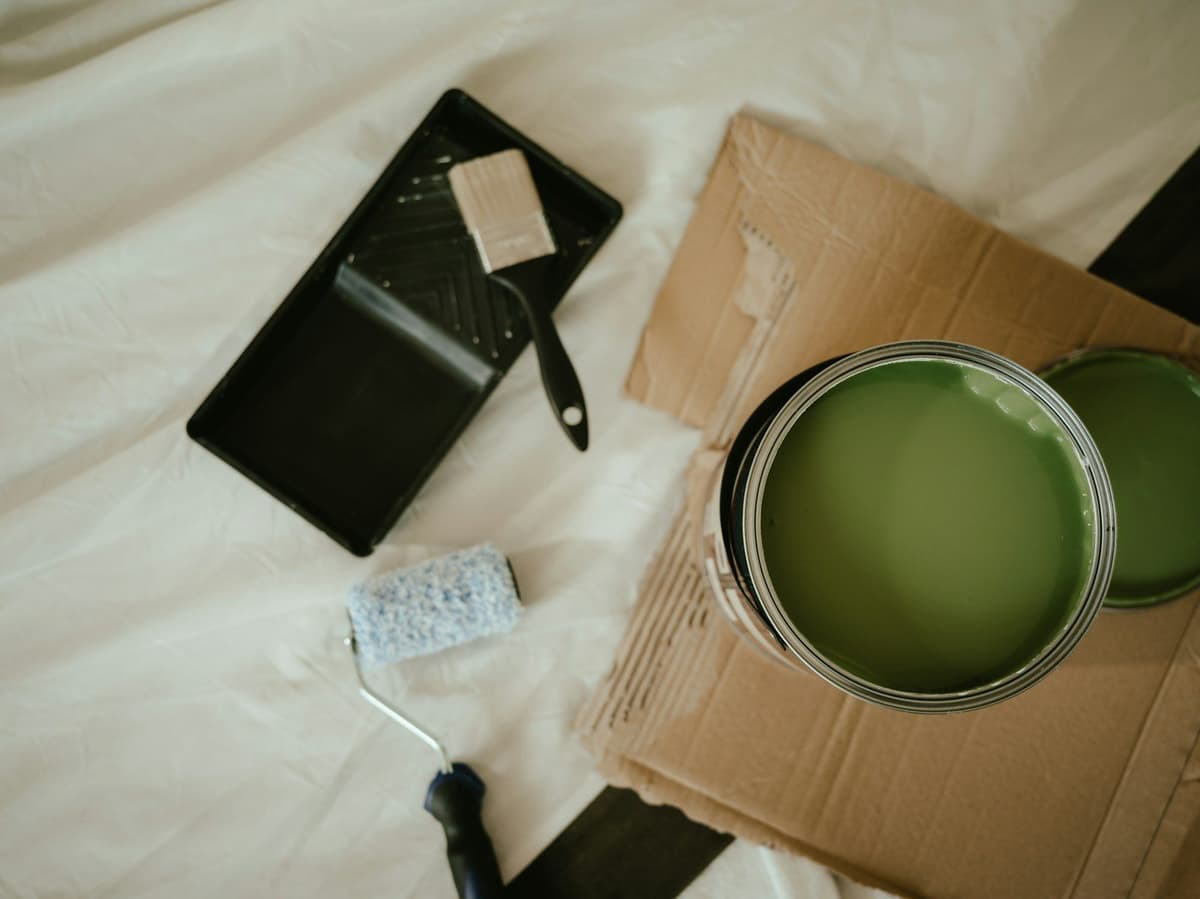
Repainting a home is a chance to transform your interior, but also to improve the quality of the air you breathe every day. By 2026, nearly a quarter of renovation projects in France will include so-called natural or ecological paint, and this trend is primarily explained by growing awareness of the impact of volatile organic compounds (VOCs) on health. Here's how to make an informed choice for your next painting project in Paris, Lyon, Marseille, or elsewhere in France.
Understanding VOCs and their impact on indoor air
Volatile organic compounds are molecules present in many everyday products, including paints. VOCs are carbon-based molecules that evaporate into the surrounding air as paint dries1. These substances can cause respiratory irritation, headaches, and in some cases, more serious health effects.
These substances irritate the respiratory tract, cause headaches, and contribute to indoor air pollution - air that is often 5 to 10 times more polluted than outdoor air according to ADEME. This is particularly true in new or renovated homes where high-performance insulation limits natural air renewal.
Not all paints emit the same amount of VOCs. Water-based paints (water replacing solvents) contain 5 to 50 times less VOC than their solvent-based equivalents. Choosing water-based paint is therefore already a first step toward healthier indoor air.
Labels and certifications to look for in France
To identify paint that respects health and the environment, several official labels exist in France. In France, there are two major environmental labels that guarantee the purchase of ecological paints. The NF Ecolabel for the French market and the European Ecolabel for the European market.
The European Ecolabel imposes strict thresholds. The European Ecolabel is more demanding on common criteria. For example, the maximum VOC content is 15 g/L compared to 30 g/L for NF Environment. Both labels verify the entire product lifecycle, from manufacturing to use.
The A+ label is also present on all paint cans sold in France since 2013. In France, A+ labeling (very low VOC emissions) has been mandatory since 2012 for all construction products2. However, this labeling alone is not always sufficient: almost all current paints display A+, making it difficult to distinguish between products.
For even higher standards, check the stated contents in grams per liter. Below 1 g/L of VOC, paint can be considered truly healthy. There is even a 1 g/L label found on relevant products. You can even find paints that emit less than 0.1 g/L of VOC.
Biosourced and natural paints available on the French market
Biosourced paints, made from natural resources, are an excellent option for reducing environmental impact. Their composition is based on ingredients of vegetable or mineral origin rather than petrochemical derivatives.
Natural paints replace petrochemical binders with vegetable oils (linseed, sunflower, safflower), natural resins such as dammar or rosin, and mineral or plant-based pigments. Result: very low volatile organic compound content, sometimes zero.
The French market today offers several brands specializing in ecological paints. These manufacturers have made great progress in recent years: current formulations now rival traditional paints in terms of durability, color range, and ease of application. Whether you live in Lille, Bordeaux, Toulouse, or Nice, these products are available in specialized stores and sometimes even in large DIY retailers.
Practical advice for choosing and applying low-VOC paint
Beyond product choice, several precautions help limit VOC exposure. Even with low-emission paint, it is recommended to ventilate rooms during and after application. Open windows wide during work and continue ventilation for the 48 hours following.
When requesting a quote on our platform, don't hesitate to specify your preference for ecological paint or low-VOC paint. Painters registered on our platform are familiar with these products and can advise you on the options best suited to your project, whether it's repainting a child's bedroom in Nantes, a living room in Strasbourg, or any other room in Brittany, Normandy, or Provence.
For sensitive spaces such as children's bedrooms or rooms occupied by vulnerable people, systematically choose paints certified with VOC content below 1 g/L. Some paints even comply with the toy standard (NF EN 71-3), an additional guarantee for spaces dedicated to the youngest.
Finally, remember to check the complete composition of the product, not just VOC emissions. Some paints display low VOC content but contain other undesirable substances. European Ecolabel and NF Environment labels also verify the absence of heavy metals and other problematic components, making them reliable reference points for a truly healthy choice.

Ready to paint?
Get free quotes from verified local painters in minutes. No commitment.
Sources
External sources open in a new tab.